Places are built by the people who use them.
Placemaking and community development in Ottawa and across Canada
Victoria Williston helps organizations make a place work better: the public-space projects, the community engagement behind them, the funding that pays for them, and the unglamorous implementation that gets them built. She has done this inside a district organization responsible for one of Canada's busiest historic areas, and she brings the same method to municipalities, business associations, nonprofits, cultural organizations, and developers. It is the work her career is built on and the direction it is heading: she is working through the University of Waterloo’s Economic Development Program toward the Ec.D. designation.
- Strategy
- Partners
- Place
- Program
- Story
- Delivery
What this covers
- Placemaking and public space: activation plans, temporary installations, programming that gives people a reason to stay, and the approvals, partners, and operations behind them
- Community engagement and consultation: designing a process that produces real choices rather than a blank page, and that leaves the people who did not get their way still at the table
- Funding and grant applications: the case for support, the application itself, and the reporting afterward
- Partnership development: municipal departments, tourism and economic development bodies, business associations, cultural organizations, and neighbourhood groups
- Strategy and implementation: turning an approved plan into a workplan, a budget, and a sequence of things that actually get done
How she works
Test before you build. A pop-up, a temporary installation, or a single season of programming tells you more about how people will use a space than another round of consultation will, and it costs a fraction of getting a permanent build wrong. Victoria is data-driven about this: small interventions first, watch what people actually do, then design the permanent version around the evidence.
That approach has a literature behind it, and she has written about where it comes from and what it looks like in practice. Desire Lines Don't Negotiate is the short version.
The second half of the job is less visible and matters just as much: knowing how a city actually says yes. Permitting, special-event review, licensing conditions, accessibility standards, council timelines, and the genuine concerns of the businesses and residents who share the place. A plan that has not been through that thicket is a drawing, not a project.
What she has done
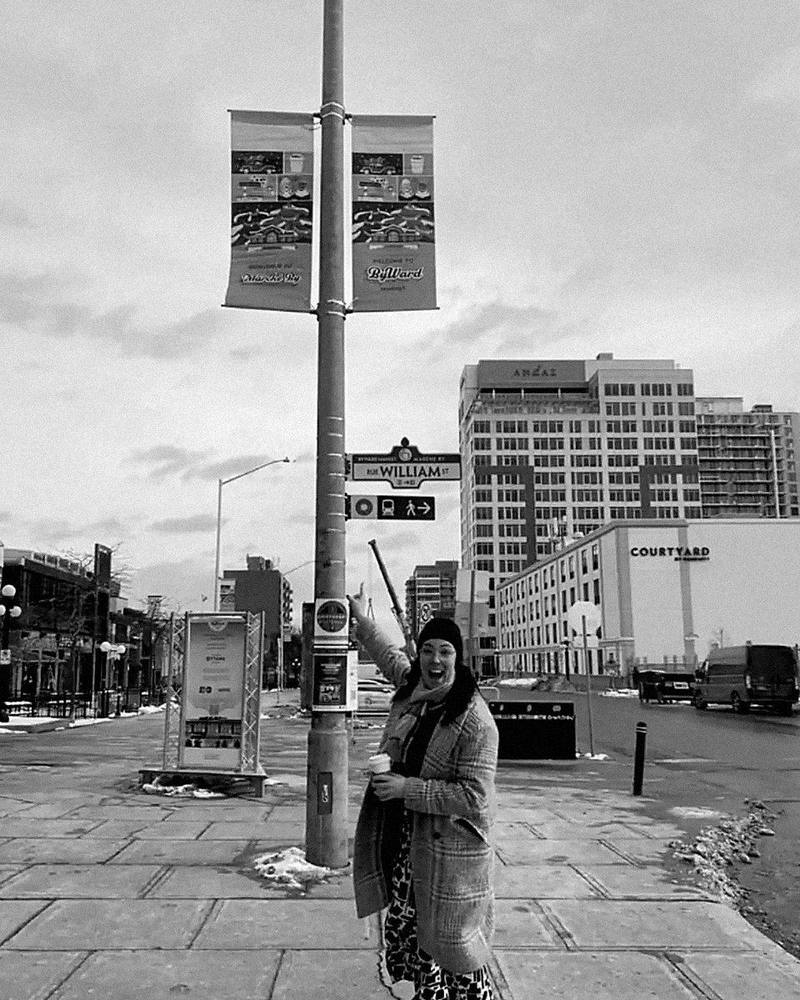
As Executive Director of the ByWard Market District Authority, and before that as the organization's first marketing and communications lead, Victoria worked on a district of more than 500 businesses, hundreds of vendors, residents, and institutions, with roughly 25 million visits a year. With the team and the City of Ottawa, that work included a new public square, a relaunched night-time ambassador program, a pilot that did not succeed but produced the data for what came next, and a City placemaking agreement taken from contract to implementation in five months. She co-authored the application that secured $2.25 million in events funding.
Outside that role she has worked with Arts Ottawa on a data collection strategy for how artists are funded and written into public realm plans, observed the Ottawa Art Gallery's peer jury for public mural selection and arranged flow-through funding for organizations that could not hold the money directly, written and issued RFPs, and helped neighbourhood associations get practical changes through City Hall. See the work.
Where this is heading
Economic development is the direction of Victoria's career, and she is deliberate about the difference between what she has done and what she is still learning. The placemaking, engagement, funding, and delivery on this page are work she has led. The formal economic development discipline around it, the business retention and expansion work, the investment attraction, the labour-market and sector analysis, is training she is in the middle of: the University of Waterloo’s Economic Development Program, Years One and Two in progress. The program is accredited by the Economic Developers Association of Canada and is the recognized Canadian route to the Ec.D., the Certified Economic Developer designation, which she is working toward. It follows Project for Public Spaces' Placemaking: Making It Happen, completed in 2026 and carrying AICP CM planning credits.
She is open to a senior economic development, placemaking, or district management role with a municipality, a development corporation, or a business improvement area, and to fractional and interim engagements for organizations that have the work but not the post. She also serves on the board of Synapcity, Ottawa's civic-engagement organization, and chairs its elections committee.
Working on a place?
Tell Victoria what you are trying to make happen.